You have only recently moved in or paid for a new roof, and then hail arrives. It is reasonable to hope the roof came through untouched. A recent installation helps describe its starting condition, but it does not make the covering immune to impact.
A recent installation changes the context
A shingle has more to it than its visible granules. Those granules protect the surface, while reinforcing material and asphalt make up the body beneath. An impact can damage that body even before water appears indoors. The relevant question is whether the shingle remains able to do its job, not simply whether the roof looks new.
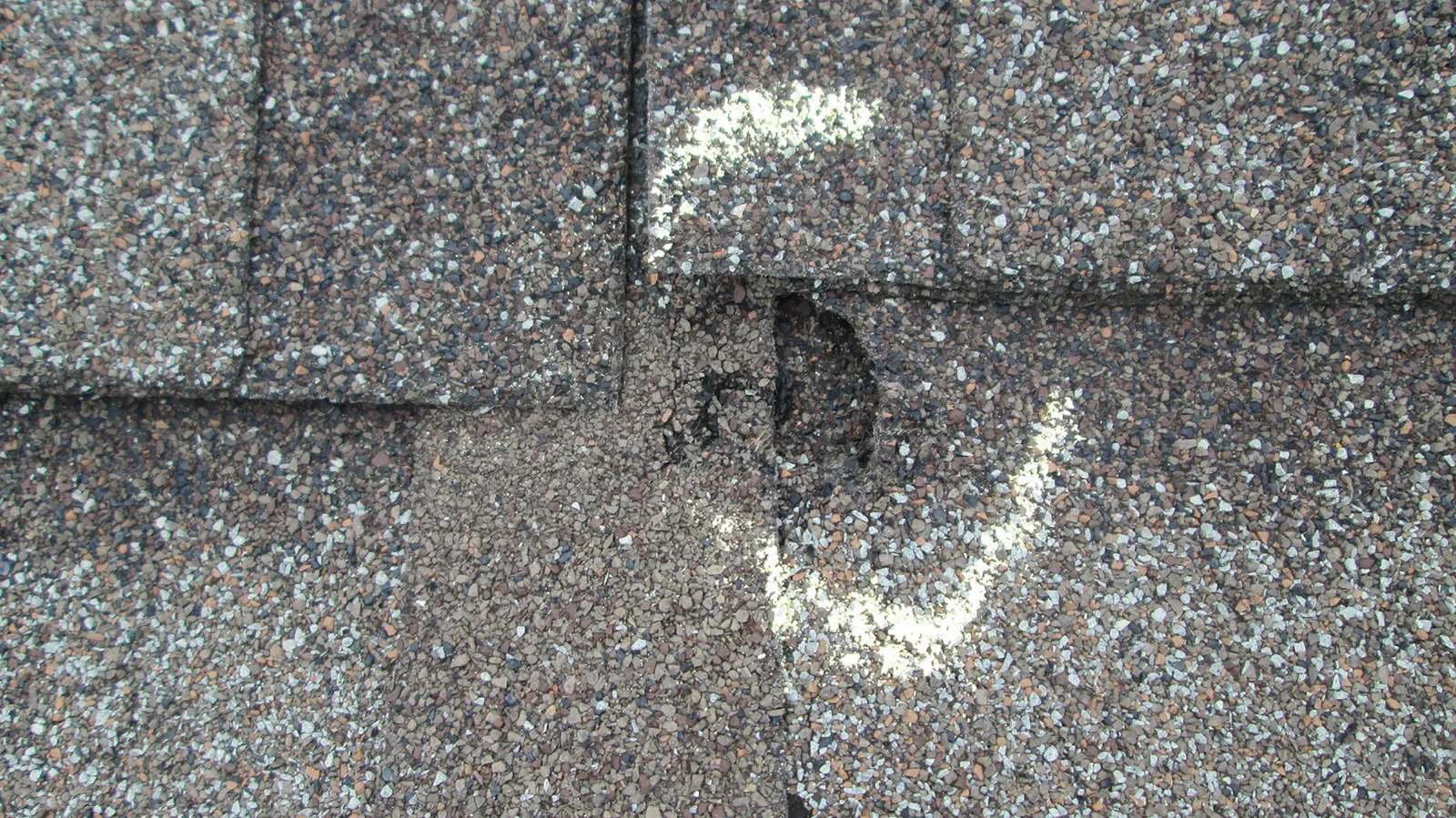
A mark alone is not the answer, either. A scuff on a shingle, a dent on a vent and a damaged shingle mat are different observations. Exposed metal may show impacts clearly while the condition of adjacent shingles takes a closer look to establish. Treating every dent as proof that the entire roof failed skips that assessment.
The effects can vary within one property. Roof slopes face different directions, and hail does not necessarily strike every surface with the same force. A few affected pieces and damage spread across several slopes can lead to different repair scopes. A new roof does not automatically belong in either category.
For a homeowner, the useful next step is a roof inspection when you have noticed a change or have a specific storm concern. You do not need to climb up, press on shingles or identify hail marks yourself. Tell the roofer what prompted the question and let the material’s condition guide the answer.
A mark is a clue, not the whole answer
Illustrative roof damage. Impact marks need to be assessed in the context of the material and surrounding roof; this photograph is not a documented Flint Ridge project or a Gravette storm record.
Condition matters more than a birthday
A newer shingle covering may provide sound, workable material around a damaged area. That can support a targeted repair: remove the affected pieces, restore the layers beneath where needed and tie the new work into intact roofing. Color availability matters to the appearance, but the quality of that connection matters to weather protection.
If impacts or other failures extend widely, a larger scope may be necessary. The roofer should be able to explain how the findings lead to the proposed work. “It is new” is not a complete reason to dismiss damage, just as “there was hail nearby” is not a complete reason to replace every slope.
The Gravette hail and wind archive can help establish a weather timeline. Its reports describe nearby recorded conditions, with clear distance and date limits. They do not establish which shingles were damaged on your home or whether an insurance policy covers the loss.
A manufacturer’s product warranty, a builder’s construction terms and a homeowner’s insurance policy also answer different questions. The cause of the damage and the applicable terms determine which, if any, belongs in the conversation. A recent move-in date does not decide that for you.
For the physical roofing assessment, the storm damage guide explains hail impacts, wind creases and repair scope. If coverage may be involved, contact the insurer promptly for its process while addressing any urgent need to protect the home.
It is possible to take a roof concern seriously without assuming the worst. Establish what changed, understand the condition around it and choose the work that restores the roof. That is a more useful outcome than treating the installation date as a verdict.