Seams and punctures
Open seams and damage from rooftop traffic can provide direct entry points. Repair requires compatible material, appropriate preparation and enough sound surrounding membrane for a dependable connection.
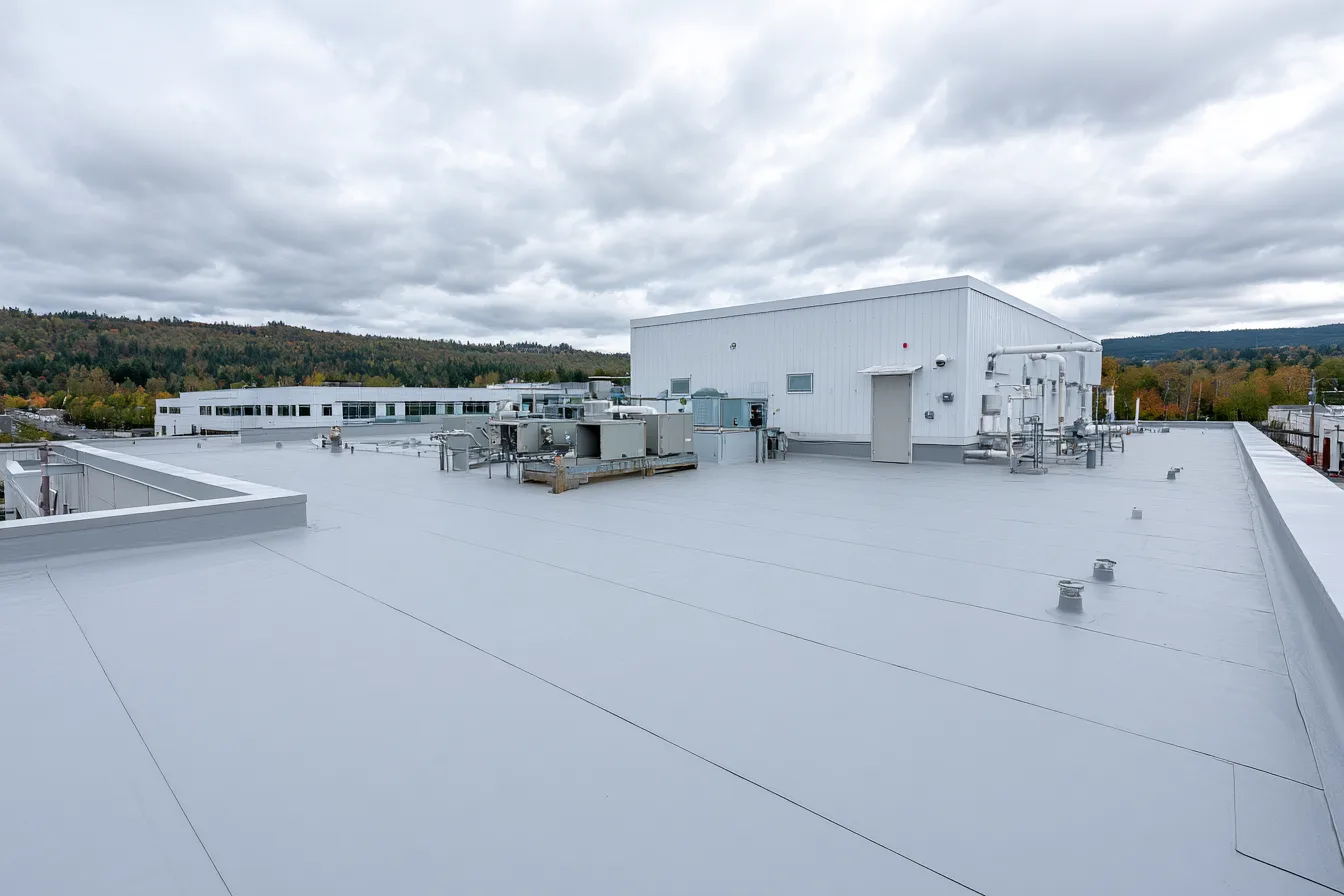
Water can travel along the deck, insulation or roof layers before it appears inside. A seam opening several feet away, a poorly flashed curb or a failed edge connection can all send water toward the same indoor area.
The inspection considers the membrane and the details together. The roof’s material matters because a welded thermoplastic seam, an adhered membrane patch and a built-up roof repair use different methods. A general roof cement is not a universal answer.
The condition underneath also matters. A surface patch over saturated insulation leaves trapped moisture in the assembly and may give new work an unreliable base. Repair sometimes means opening beyond the visible defect to reach dry, stable material.
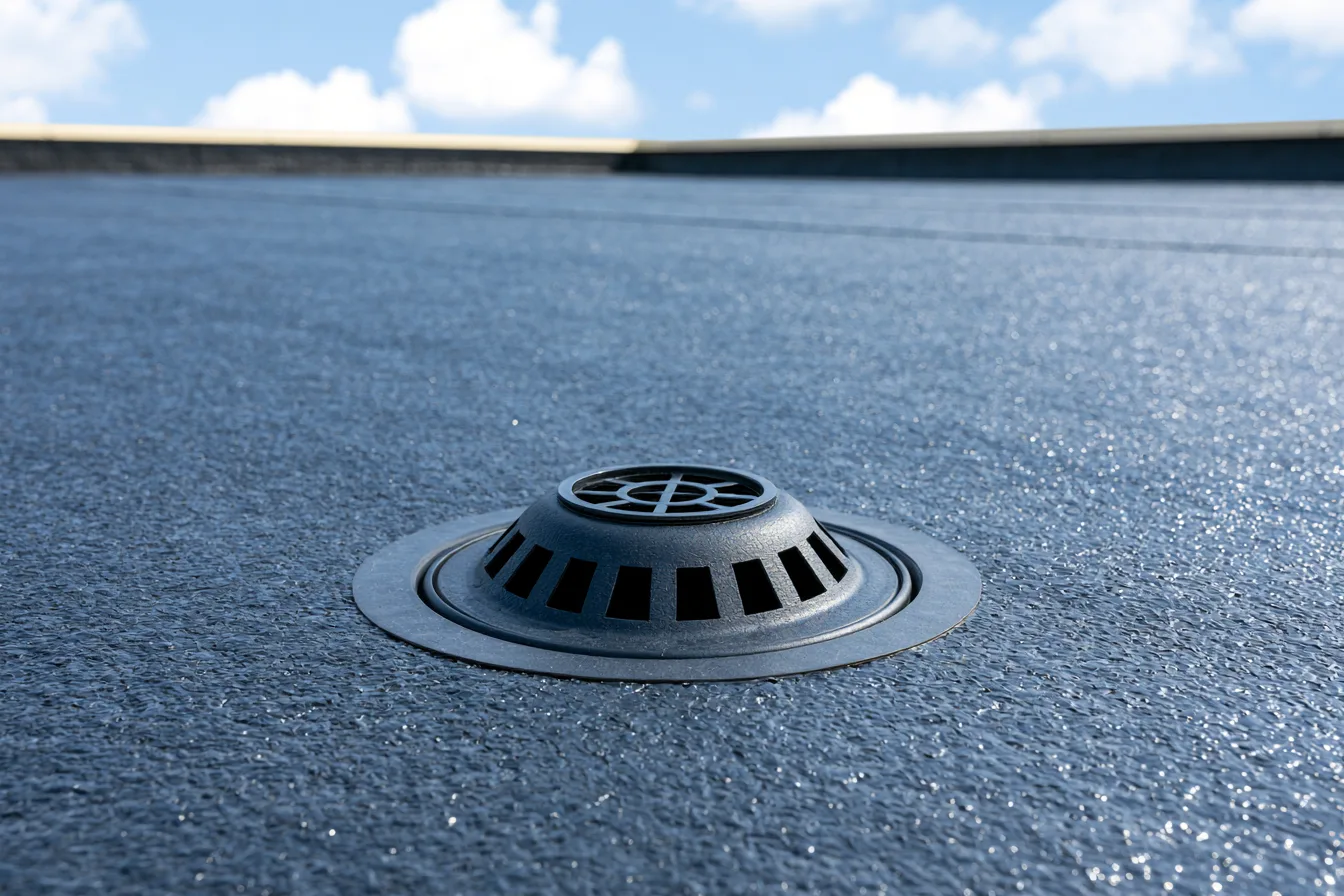
Open seams and damage from rooftop traffic can provide direct entry points. Repair requires compatible material, appropriate preparation and enough sound surrounding membrane for a dependable connection.
Roof openings need flashing that connects continuously to the main membrane. Movement, loose termination details and poorly arranged supports can stress that connection. The equipment interface and the roofing both need to be considered.
Water can enter through the wall or its cap and reach the roof assembly. Repairing the field membrane alone may miss that path. The top, face and base connections of the parapet help explain where the water is moving.
A blocked drain and a low area that cannot reach an outlet are different problems. Clearing debris restores one water route; persistent ponding may require a drainage or slope correction as part of the work.
Contained damage
A local seam or flashing failure can be a focused repair when the membrane around it is serviceable and underlying layers remain sound. Its boundaries follow the condition, not just the size of the ceiling stain.
Moisture beneath
Wet insulation and damaged substrate need more than a surface seal. The affected extent must be understood so the repair can restore the layers as well as the exposed membrane.
Wider failure
When defects and moisture are distributed across the roof, repeatedly treating individual leaks can leave a failing assembly in place. The commercial roofing hub compares broader restoration and replacement paths.
For a thermoplastic single-ply roof, the TPO guide explains how repair, recover and replacement differ.
The indoor leak location starts the investigation. The roof material and condition determine the repair.
The inspection considers membrane seams, curbs, parapets and drainage together. Recent equipment work or a leak that appears only during a particular rain direction can help narrow the search.
A surface defect and moisture beneath it need different treatment. The scope should account for any affected insulation or substrate, then set out how the repair will tie into serviceable roofing.
The contractor needs compatible materials and suitable conditions for their preparation and application. Weather, drying and concealed damage can change the sequence. Building access and rooftop equipment use belong in that plan as well.
Clearing a blocked outlet is a different job from rebuilding the flashing around that outlet. If water has entered the insulation, the repair may also need to open a larger area and replace wet layers. A roof that lacks an effective fall toward its drains raises a separate drainage-design question.
That is why the ceiling stain’s size is a poor pricing guide. The failed component, reach of the moisture, compatible repair method and access to the work decide the scope. The estimate should make those parts clear, including how any concealed damage will be handled.
If the roof has an existing warranty or guarantee, check its repair and notification requirements before work changes the system. A local repair restores the affected area; it does not automatically renew coverage on the rest of the roof.
No. Debris may block an otherwise useful outlet, but low areas can also hold water because of roof shape, settling or inadequate slope. Persistent standing water deserves a cause check and a repair plan suited to the system.
The curb flashing, nearby seams, equipment drainage or another connection can be involved. The indoor location is a useful starting clue; it does not establish which component has failed. Tell us about any recent equipment work as well as the leak.
Only when the repair method and materials are compatible with the existing roof. Products that look similar can require different cleaning, primers, adhesives or welding methods. The system needs to be identified before choosing the repair.
Tell us which part of the building is getting wet and what you know about the roof. A free inspection can help define the repair and the next step.