Hail impacts
Look beyond the surface mark
Scuffs, granule loss and dents are clues. The inspection looks for actual damage to the roof material and its ability to keep shedding rain. A mark alone does not define the repair scope.
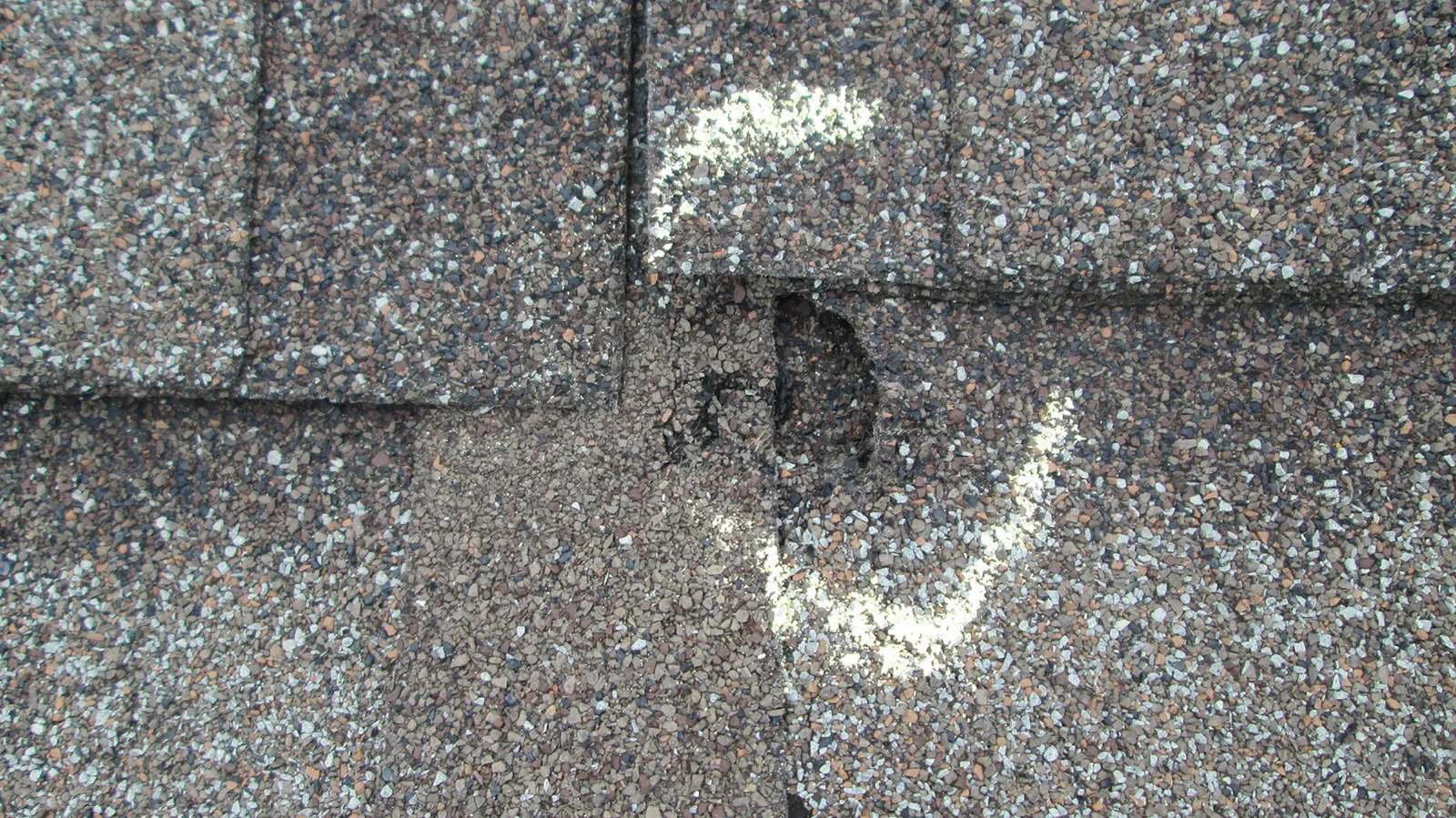
Hail and wind affect roofs in different ways. Hail can damage a shingle’s reinforcing mat. Wind can lift, crease or tear a shingle and disturb the fastening or seal that holds it in place.
Those failures are not always visible from the ground, and a dent on exposed metal does not establish the condition of nearby shingles. The covering, flashings and the roof around each concern need to be considered together.
If water is coming inside, protect people first. Keep away from sagging ceilings, damaged electrical fittings and unstable areas. Do not climb onto a wet or damaged roof. Describe the opening or indoor leak when requesting help so the immediate problem is clear.
Once the storm has passed, look from the ground for missing roofing, fallen branches or new gutter damage. Inside, note which rooms are wet and move belongings away from leaks when you can do so safely. Keep clear of sagging ceilings and water near electrical fittings.
Temporary protection can help limit further water entry while the roof is assessed. It is separate from the permanent repair, which needs to address the damaged covering and any affected layers underneath. A wet, steep or damaged roof is a job for properly equipped help.
Keep photographs and the storm date if insurance may be involved. The roof insurance guide explains the difference between documenting the damage and deciding what the policy covers.
Hail impacts
Scuffs, granule loss and dents are clues. The inspection looks for actual damage to the roof material and its ability to keep shedding rain. A mark alone does not define the repair scope.
Wind damage
A lifted shingle can look as though it settled back into place while retaining a crease or damaged fastening. Repair depends on the affected pieces and the condition of the shingles around them.
Debris or a branch
An impact can break through the covering and decking. The visible hole may not show the full reach of the damage, and unstable material needs to be addressed before roof access or permanent repair.
Our Gravette hail and wind archive collects NOAA reports near the city. It can help place a weather event in time and show the reported conditions in the surrounding area.
A nearby report cannot establish what happened at your address. Hail size and wind effects vary across a storm, while a roof’s shape, covering and prior condition affect the result. The property inspection and the weather record answer different parts of the question.
A roofing inspection evaluates the physical work. Temporary protection may be needed before a full repair; access and unsafe conditions affect what can happen immediately.
If insurance may be involved, contact the carrier for its claim process and explain any urgent protection already needed. The insurer applies the policy, including deductibles and exclusions.
The repair scope, claim handling and your approval need to come together before permanent work proceeds. Our Arkansas roof insurance guide explains replacement cost, depreciation and the difference between a roof recommendation and a coverage decision.
Yes. A torn or creased shingle may expose underlying layers before rain reaches the room. The absence of an indoor leak does not settle the condition. An inspection checks the roof itself.
No. The material, extent of damage and ability to repair the affected areas determine the roofing options. A localized repair may fit a sound roof; damage distributed across many slopes can require a larger scope.
That depends on the cause, damage and policy. The insurer makes the coverage decision. No nearby hail report, roof age or inspection request guarantees a payment.
Tell us about the missing shingles, impact or leak you noticed. A free inspection can help you move from storm worries to a clear roofing decision.