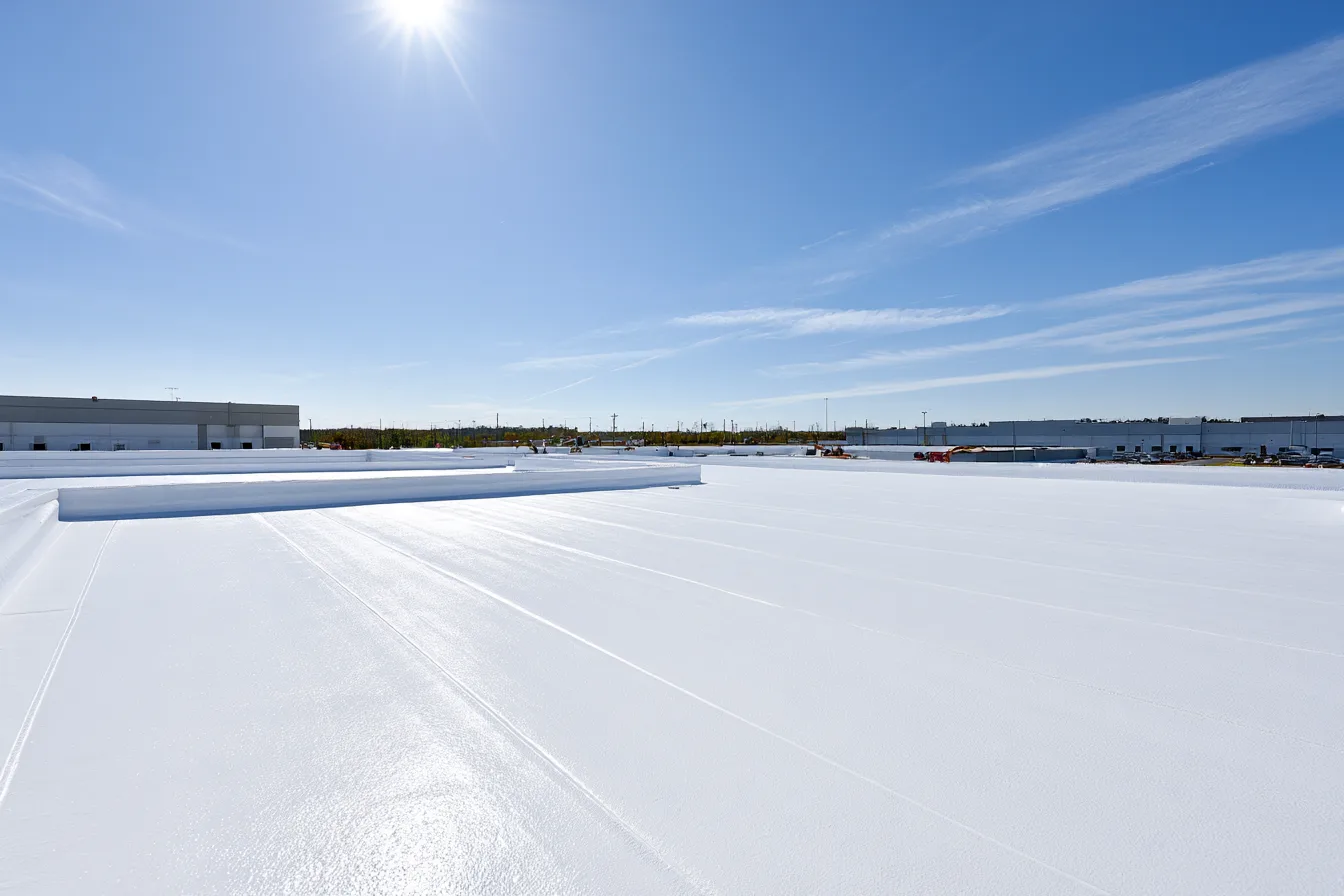
Wide white coated flat roof under bright sky with distant buildings

Commercial roof coatings in Gravette

A roof coating can extend the useful service of an eligible commercial roof. The first question is whether the roof underneath is dry, stable and worth keeping.

Call (479) 344-3281Or send your roofing request here.

Let’s talk about your building

Tell us where the roof is and what needs attention.

Commercial roof coatings in Gravette

A liquid-applied coating creates a new weathering layer over a prepared roof. It does not replace the deck, dry saturated insulation or correct every drainage problem hidden below the surface.

That makes qualification the most valuable first step. Moisture conditions, existing material and adhesion determine whether restoration is practical. A roof that passes those checks can still need seam, flashing and localized substrate repairs before coating begins.

For a building owner, the useful comparison is the complete restoration scope against the necessary replacement scope. Counting only the price of the coating leaves out the preparation that allows it to work.

Roof coating preparation and application

  1. Qualify the existing roof

    Assess moisture and substrate condition, and establish whether the selected coating can bond to the surface. Moisture investigation and adhesion testing may be needed to define eligibility and the work boundaries.

  2. Prepare and repair

    Clean and prepare the surface as required by the system. Wet or unsound layers need removal and replacement where found; seams, penetrations and damaged details must be corrected.

  3. Detail and apply

    Reinforcement, application conditions and the specified coating thickness are part of the system. A new color across the roof does not by itself show that the required protective film and details are in place.

When roof restoration makes sense

A restoration candidate

Dry, stable and repairable

A compatible roof with a sound base and manageable detail repairs may support restoration. The specification should account for preparation and localized corrections as well as the finished coating.

A roof with one failed detail may only need flat roof repair. Establish that scope before choosing a coating across the whole roof.
A larger underlying problem

Wet or unstable layers

Extensive saturated insulation or a deteriorated substrate leaves a poor foundation for coating. Those conditions can require substantial removal, making replacement the more appropriate discussion.

A drainage concern

Water still needs a way off

Coating selection must account for water conditions, but it is not a substitute for fixing blocked drains or a failed drainage layout. Suitability for ponding exposure is product-specific.

Choosing a coating for your roof system

Silicone and acrylic are broad coating categories, not interchangeable specifications. The existing membrane, surface condition, expected water exposure and the manufacturer’s requirements determine what can be used.

Acrylic systems

Prolonged ponding needs particular care. The selected product and the roof’s drainage conditions determine whether the system fits.

Silicone systems

An appropriate silicone system may tolerate that water exposure differently. The label alone does not establish suitability for the roof.

Both need defects corrected, adhesion established and the chosen system’s application conditions met.

An existing single-ply roof may also have a useful TPO repair or replacement path, depending on its condition. Coating is one option to evaluate, not the automatic next step for every older roof.

Roof coating costs and ongoing care

  1. Preparation shapes the price

    The coating material is only one part of a restoration price. Cleaning, preparation, localized repairs and reinforced details can take substantial work before the field coating goes down. The selected system’s coverage rate and required film thickness also affect the material quantity.

  2. The existing roof must qualify

    A low total that skips preparation is difficult to compare with a full restoration scope. The existing roof must qualify first, and wet or unstable layers cannot simply be hidden beneath the new surface. If the roof is not a candidate, the broader repair or replacement options need to be considered.

  3. Care continues after coating

    Once coated, the roof still needs clear drainage, controlled rooftop traffic and care suited to the installed product. The commercial roofing page explains the maintenance considerations that continue after the work. Follow the actual system’s inspection and repair requirements; recoating is a future condition-based decision, not an automatic promise of another service-life term.

Roof coating questions in Gravette

Can coating stop an active leak?

A restoration project can address leaks when it includes the necessary repairs, preparation and suitable coating system. Rolling a coating over an unidentified opening or wet assembly may leave the underlying cause in place.

What happens to wet insulation?

Wet insulation needs to be identified and addressed; it should not simply be sealed beneath a coating. The extent of moisture can change whether restoration is still a sensible project.

Is this a service for coating asphalt shingles?

This page covers commercial roof restoration on eligible systems. It does not recommend coating a residential shingle roof. For an aging shingle covering, repairability and replacement should be assessed directly.

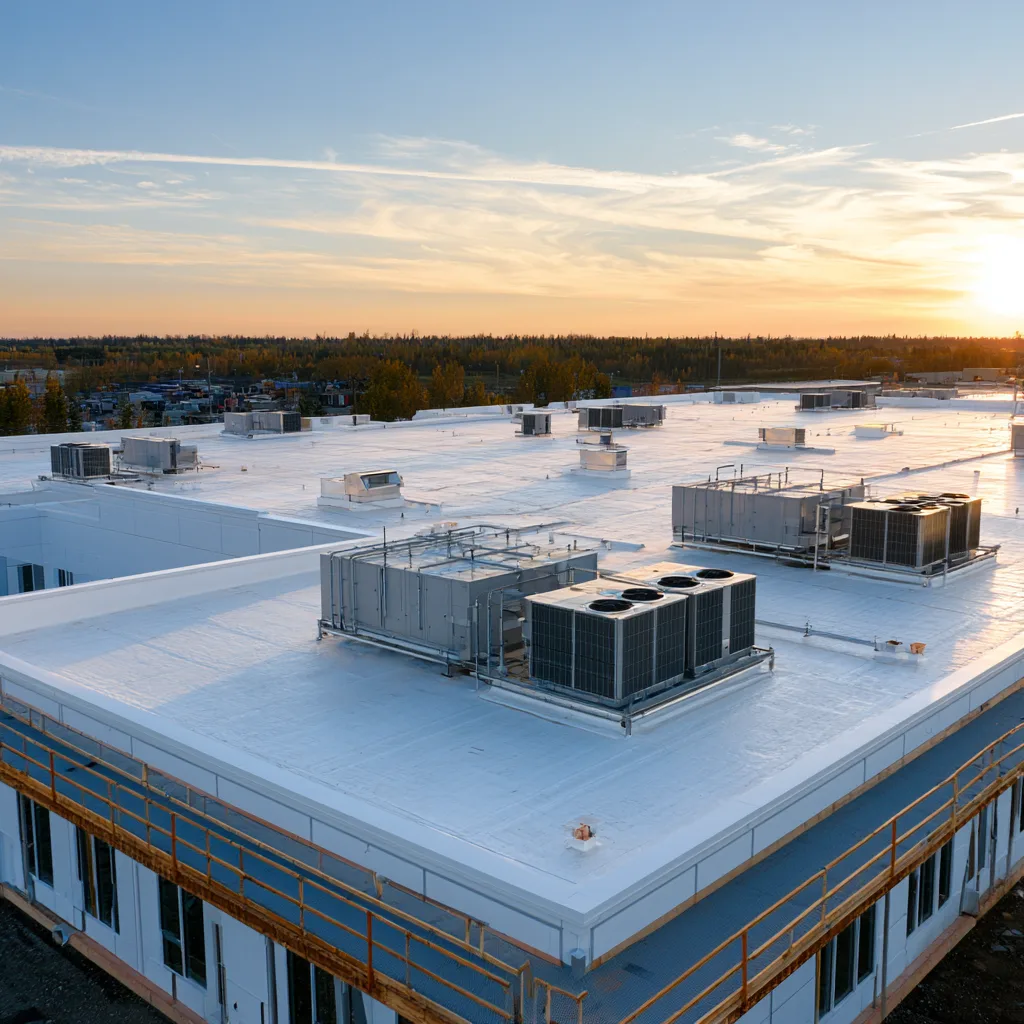
Rooftop HVAC equipment on a white commercial roof at sunset

Find out whether your roof is a restoration candidate

Find out whether your building has a roof worth restoring. Request a free inspection and start with the condition beneath the surface.

Let’s talk about your building

Tell us where the roof is and what needs attention.

Call (479) 344-3281Request roofing help